

What is Terra being compared with?
In his weekly report, Matt Wolfe compares GPT-6.1 Terra with Sol, Astra and Luna. The automatic transcript sometimes spells Sol as “Soul” and Astra as “Astro”; this article uses the official names. His comparisons with Anthropic’s model families are informal analogies, not exact product equivalences.
OpenAI describes Terra as a model for visual reasoning and computer-based work. The official standard API rates checked on 1 November 2026 are $1 per million input tokens, $0.05 for cached input and $5 for output. A token is a small piece of text. These rates are not prices for an entire completed job.
Why some charts make the choice look unclear
Wolfe asks why someone would choose Terra when certain high-effort comparisons show only small savings alongside lower scores. He reads a Sol maximum-effort MMMU-Pro score of 86.3%, with plotted costs around $0.013 versus $0.012 for Terra. The transcript is ambiguous about decimal and currency wording; the chart must be used rather than converting its spoken fragments into a new price claim.
For OSWorld 2.1, he cites Sol at $1.15 and 78%, against Terra at about $1.19 and 74.2% at maximum effort. At medium effort he cites $0.65 and 73.5% for Sol, compared with $0.50 and 66.7% for Terra. His point is the trade-off between success and total work, not that every run has these fixed prices.
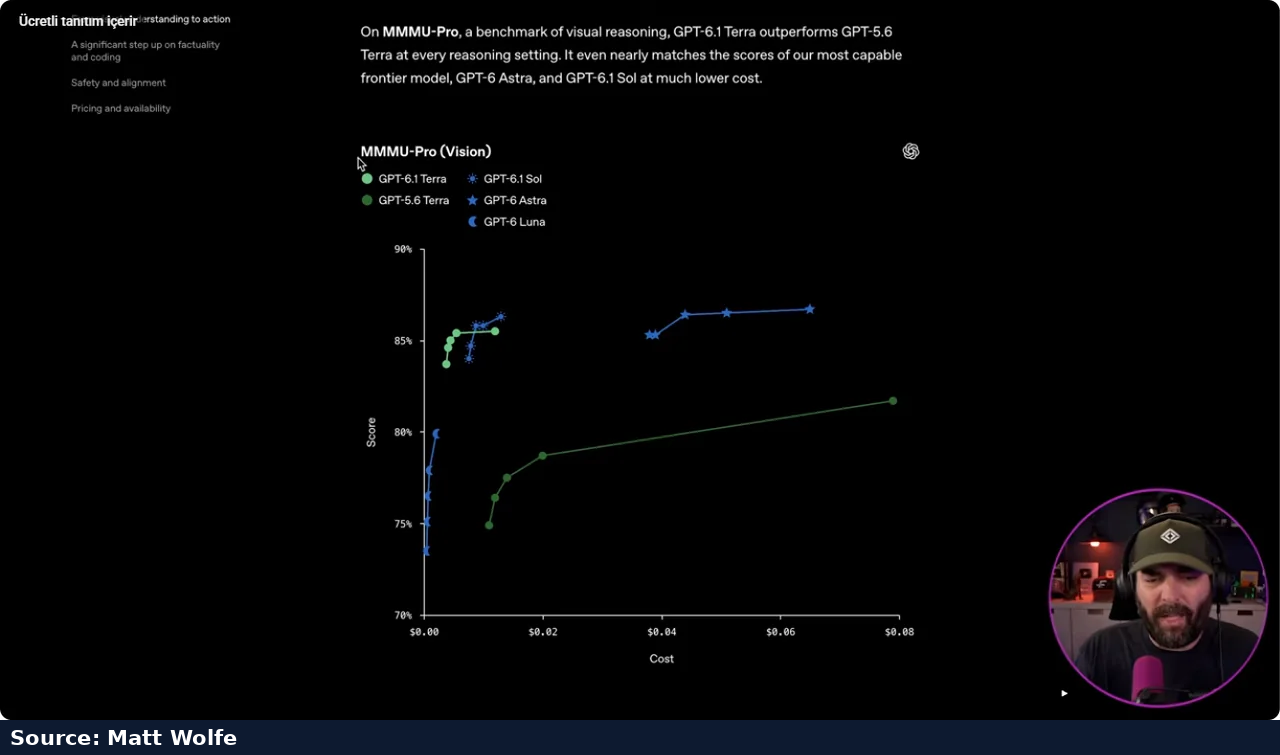
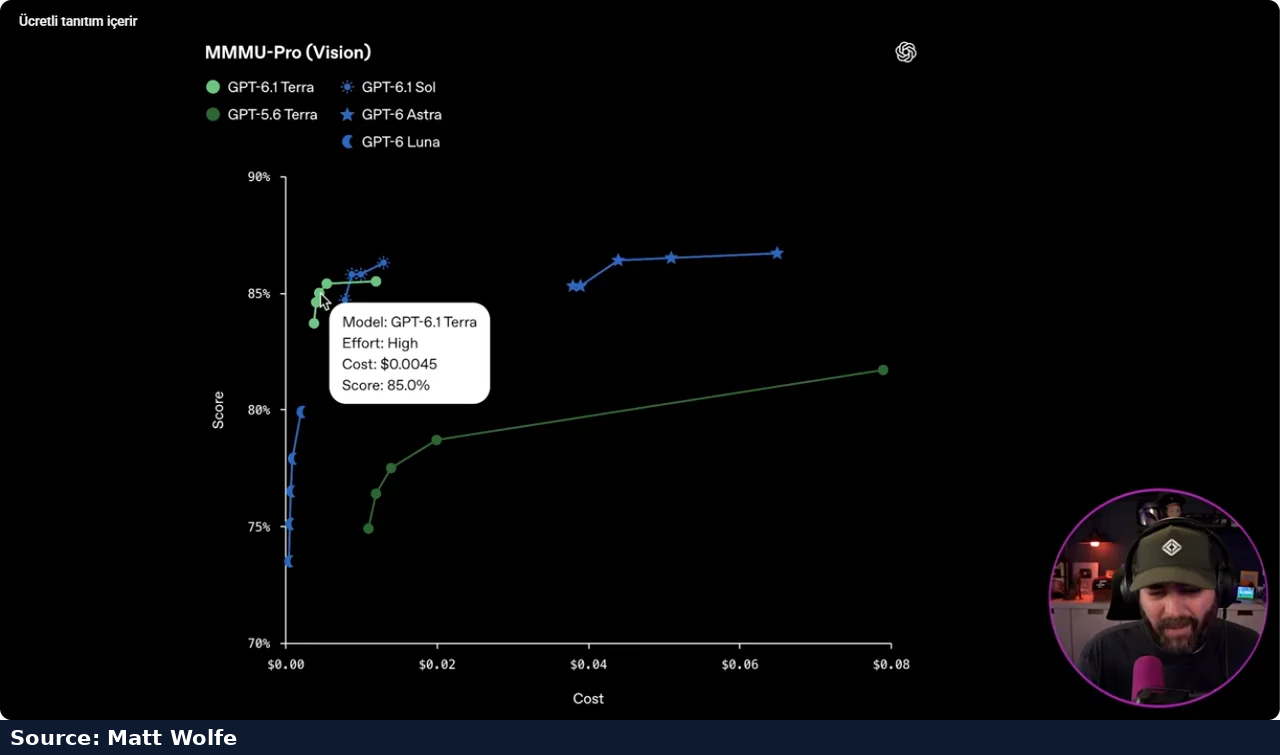
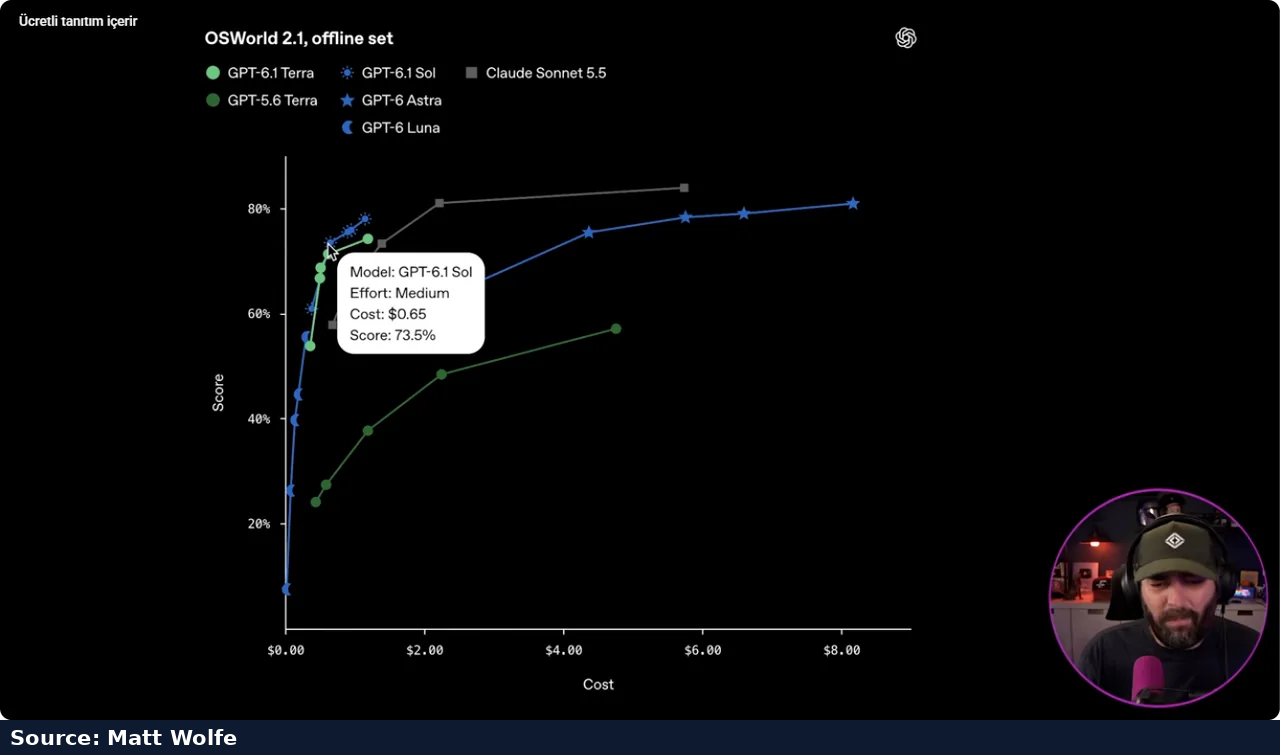
Reasoning effort changes the comparison
On Terminal-Bench 4.0, the video gives Sol a 55.9% result at about $1.98, compared with roughly $1.84 for Terra at a lower score. On the Artificial Analysis view shown, Wolfe cites intelligence scores of 55 and 51, and task-cost figures around $1.27 and $0.96. These are source-reported snapshots with their own task mix and settings.
A model may have a lower rate per token while spending more tokens, retrying more often or failing a larger share of tasks. Likewise, a maximum-effort result should not automatically be compared with another model’s medium-effort result. The task, tool setup and acceptance test need to match.
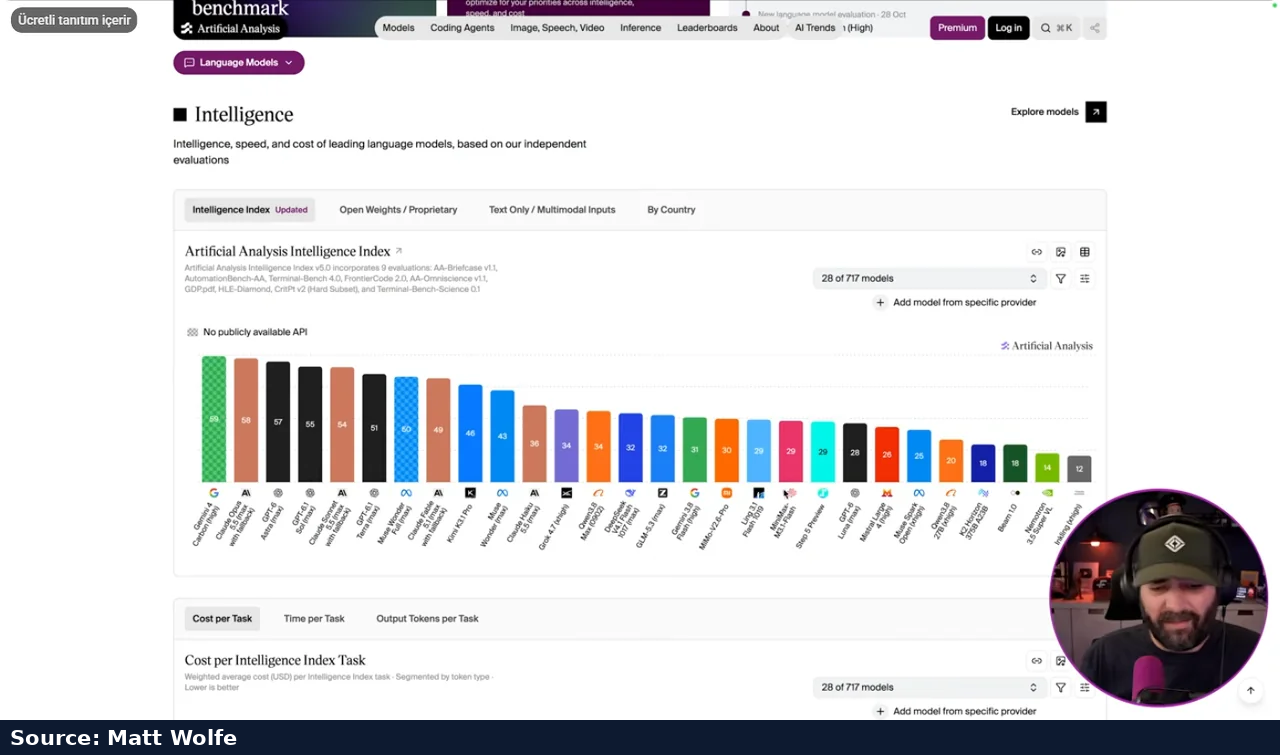
One SVG experiment is useful but narrow
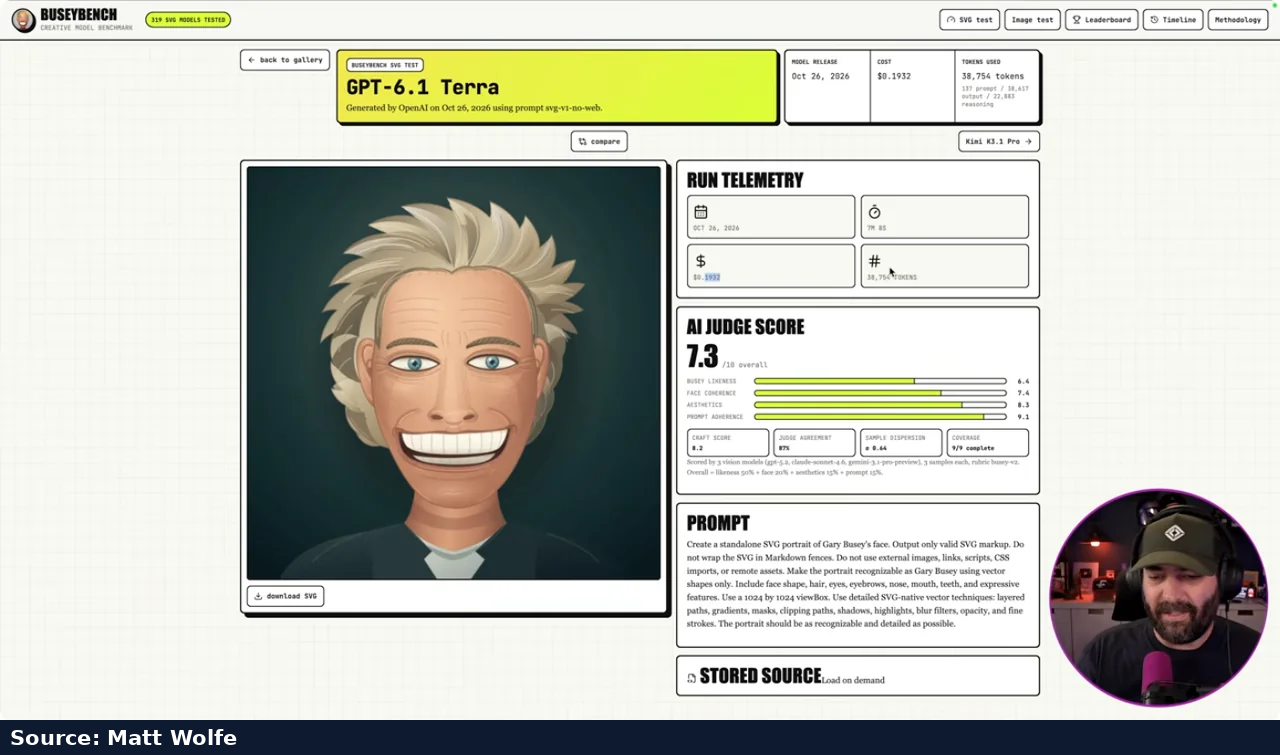
Wolfe also runs a personal test that asks models to create an SVG image of Gary Busey. SVG is a drawing format made from shapes and instructions. He reports about seven minutes, 38,000 tokens and $0.19 for Terra, with fifth place according to an AI judge.
The example can reveal differences on that prompt. It cannot establish performance across coding, browsing, document work or all visual tasks. An AI judge adds another measurement layer whose preferences and errors matter. Wolfe’s general conclusion is that Terra’s place in the range is not obvious to him from these examples.
Compare successful outcomes on your own work
The official launch page and the video emphasize different evaluations. Neither a single chart nor a publisher’s overall efficiency claim guarantees the best result on a particular workflow. Record completion, correctness, elapsed time, retries and total spend on representative tasks.
Begin with a small, repeatable comparison and keep the same instructions and checks. Escalate when the cheaper setup repeatedly misses important requirements. For the general method, see the portal’s existing model-and-reasoning selection guide; this report focuses on the new Terra comparison rather than repeating that guide.

