

The model and the planned release
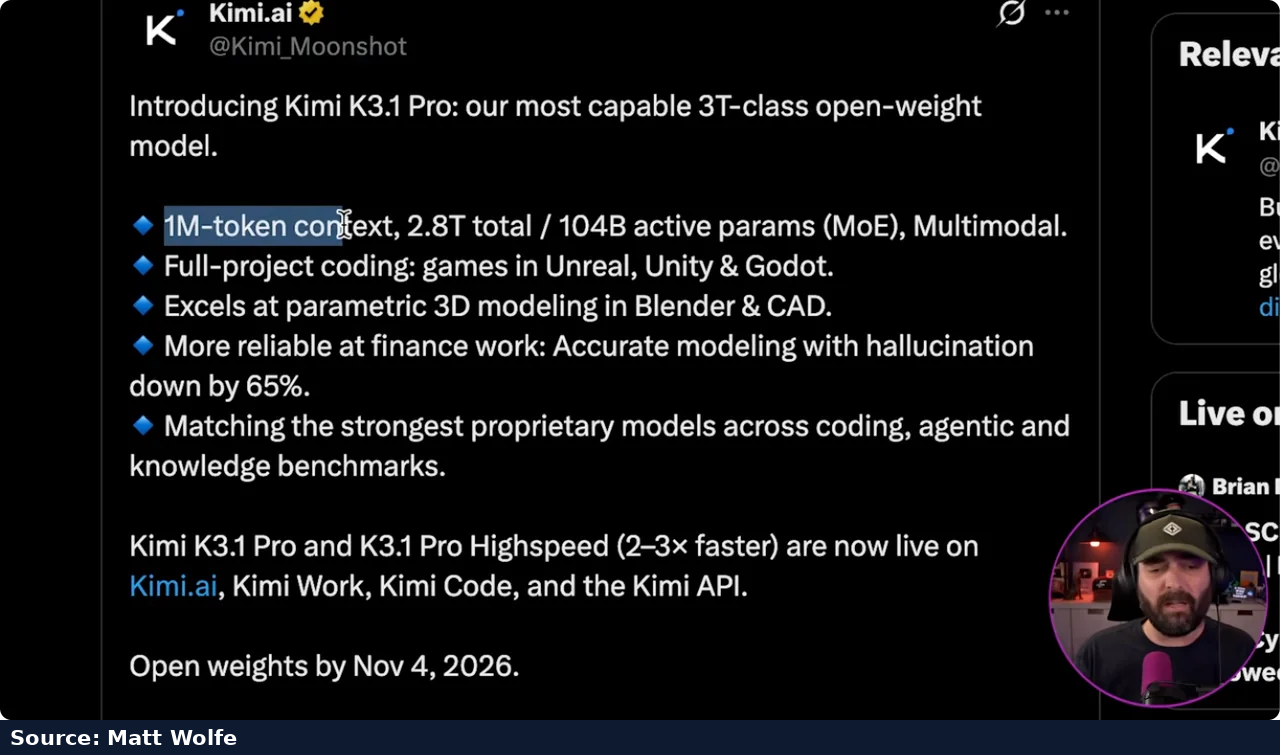
Matt Wolfe introduces Moonshot AI’s Kimi K3.1 Pro as a major open-weight contender. Open weights means the learned model parameters can be made available for others to run; it does not, by itself, settle the license, permitted uses or hardware requirements.
The video reports 2.8 trillion total parameters, 104 billion active parameters and a one-million-token context window. It says weights are planned for 4 November 2026. That date was still in the future at this article’s 1 November review. The linked Moonshot social post could not be independently read, so these details remain attributed to the video.
The reported benchmark position
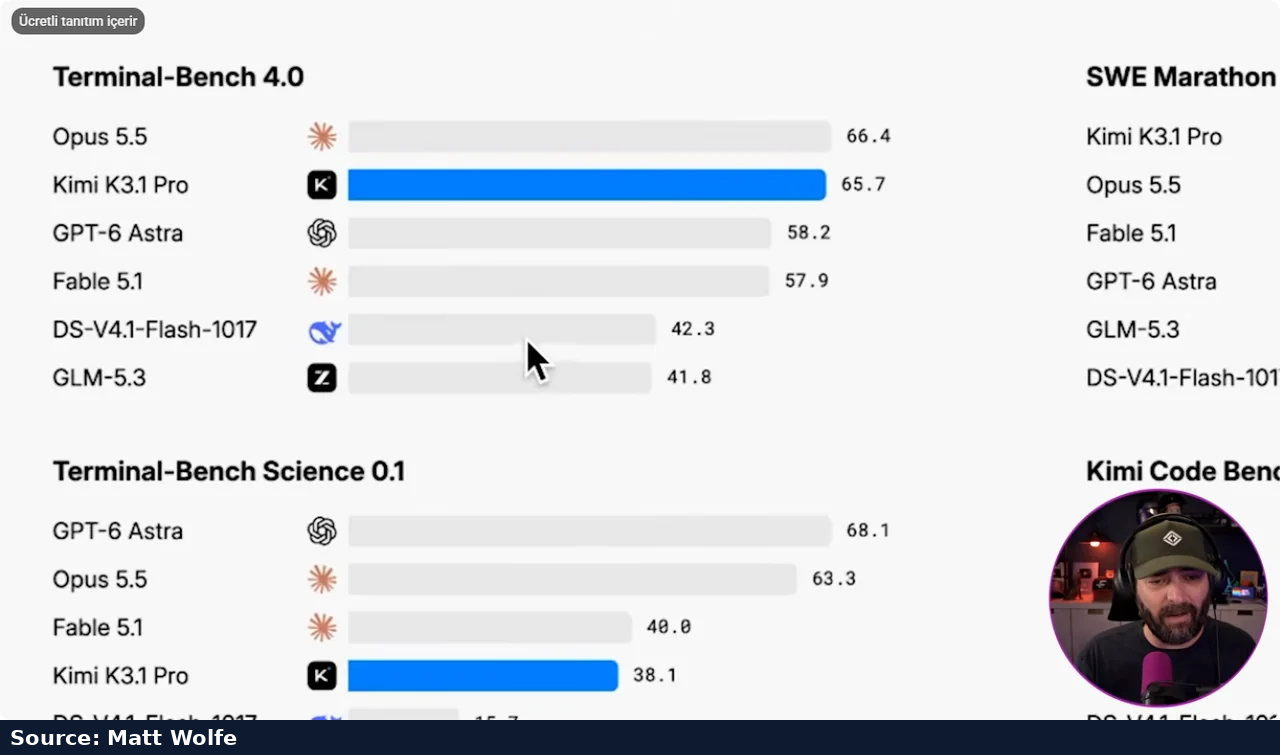
Wolfe shows Kimi competing with frontier systems, rather than only with other open-weight models. He says it beats GPT-6 Astra on the displayed Terminal-Bench 4.0 comparison but trails Opus 5.5. He also warns that the provider chose favorable benchmarks.
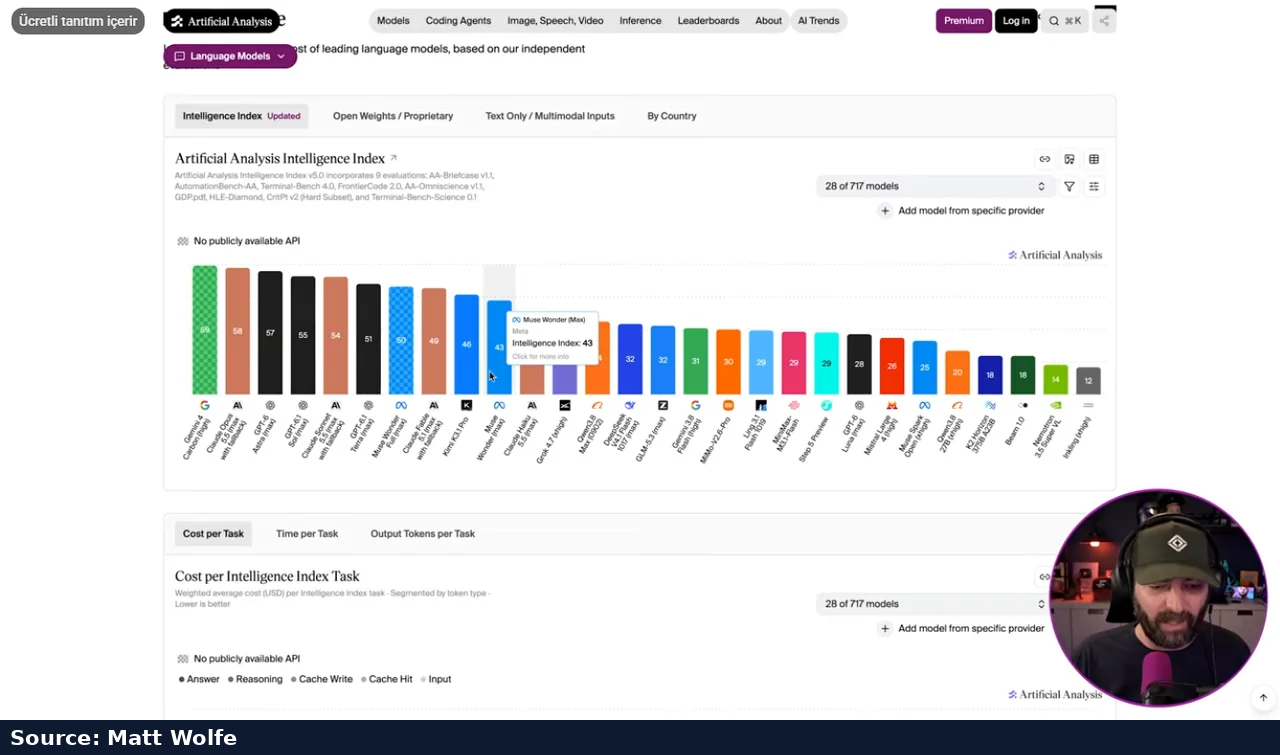
In the Artificial Analysis chart shown, he cites a score of 46, about three points below Fable 5.1. The nearest other open-weight examples he discusses are Qwen 3.8 and DeepSeek, in the low thirties, with 32 and 34 mentioned. These are the video’s dated chart readings, not current universal rankings.
The presenter’s own drawing test
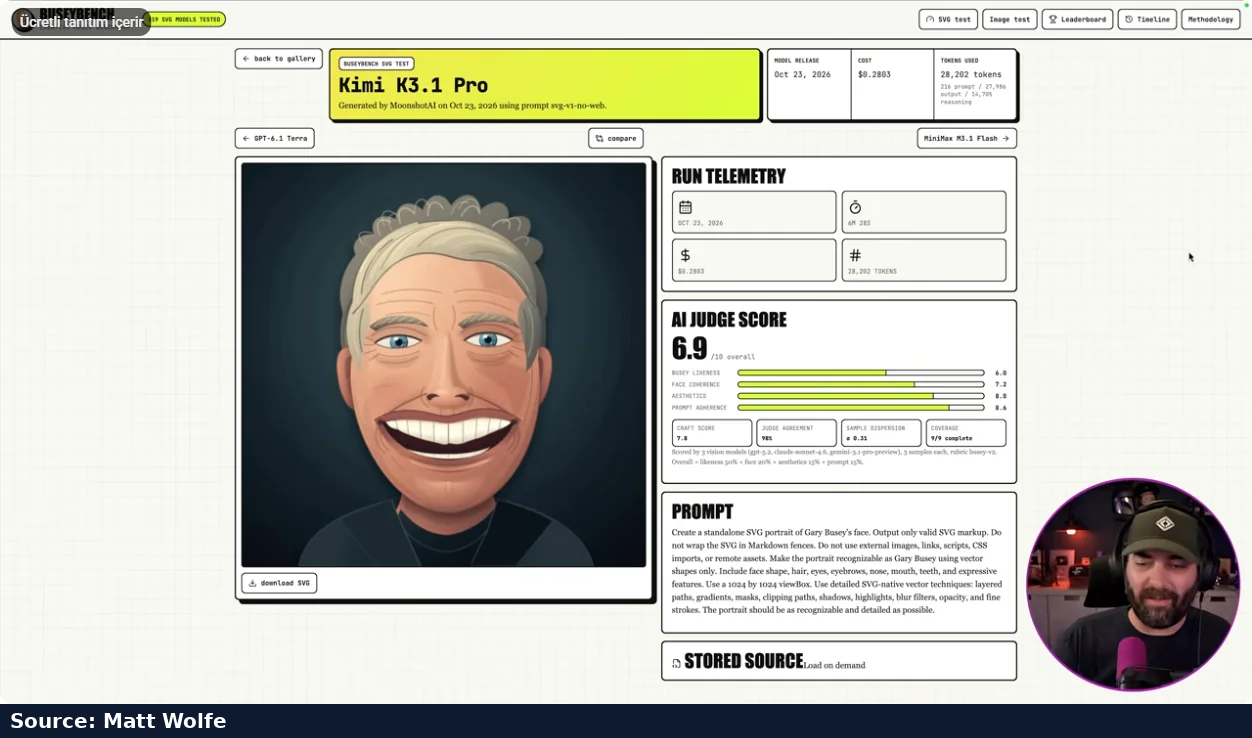
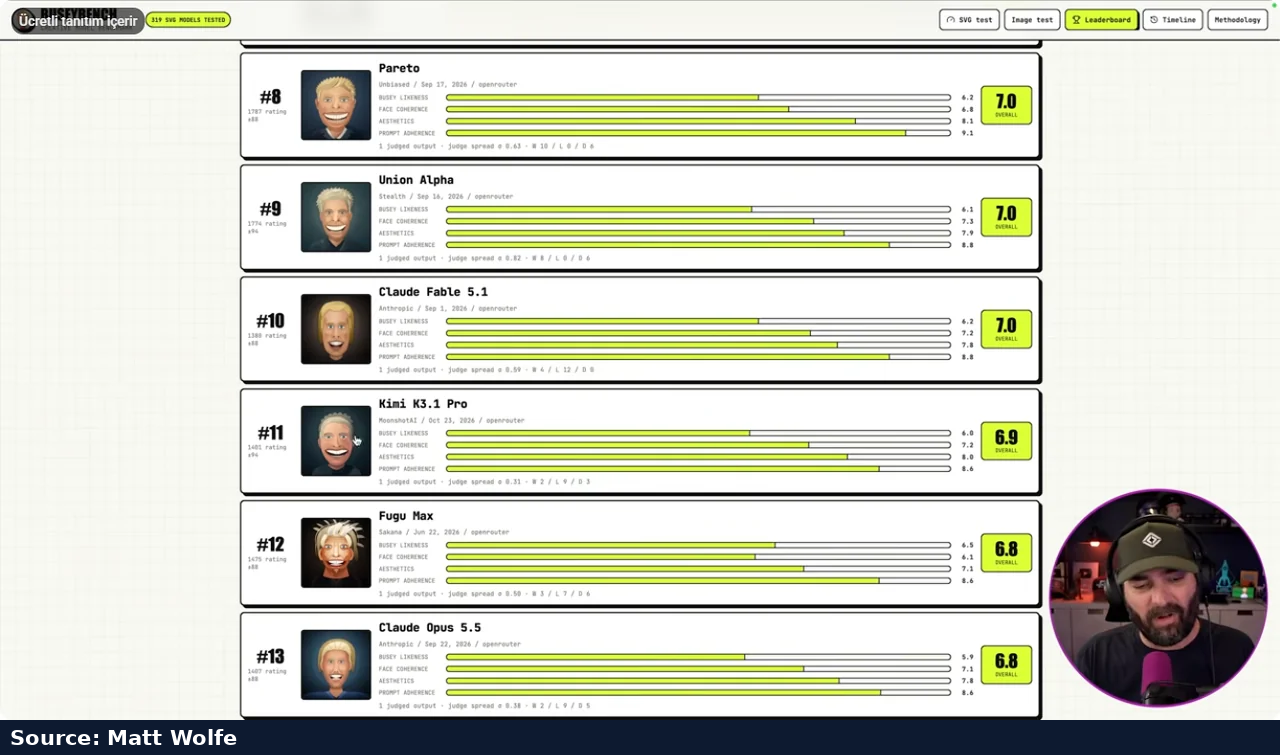
For his SVG portrait experiment, Wolfe reports roughly $0.28, 28,000 tokens and six and a half minutes. His AI judge places the result eleventh, just outside the top ten.
A narrow drawing experiment can disagree with an aggregate intelligence ranking without either measurement describing every capability. The prompt, output type, scoring method and run conditions differ. This is an illustration of why a single leaderboard is insufficient for choosing a deployment.
Active parameters are different from stored parameters
The video emphasizes that activating only part of a mixture-of-experts model does not make the full weight storage disappear. The system still needs a way to hold or load the relevant weights. The exact requirement depends on precision, quantization, offloading and the serving software.
Wolfe illustrates the scale with about 44 Nvidia 5090 cards carrying 32 GB each, or at least three Mac Studios with 512 GB each, described as costing $10,000–15,000 apiece. Treat these as rough presenter estimates, not a validated purchase list. The video does not specify enough implementation detail to reproduce a precise hardware calculation.
Where large open-weight models can still matter
Wolfe sees a clearer role for organizations such as hospitals, banks and governments that can operate substantial infrastructure. Running within controlled infrastructure can change who receives the data, but privacy also depends on logs, access controls, licenses and the application’s behavior.
His prediction is that smaller and more efficient models will eventually bring stronger local capabilities to ordinary devices. That is an outlook, not a promised delivery date. Before downloading or buying hardware, verify the released weights, license and measured memory requirements.

