

An announcement is different from broad availability
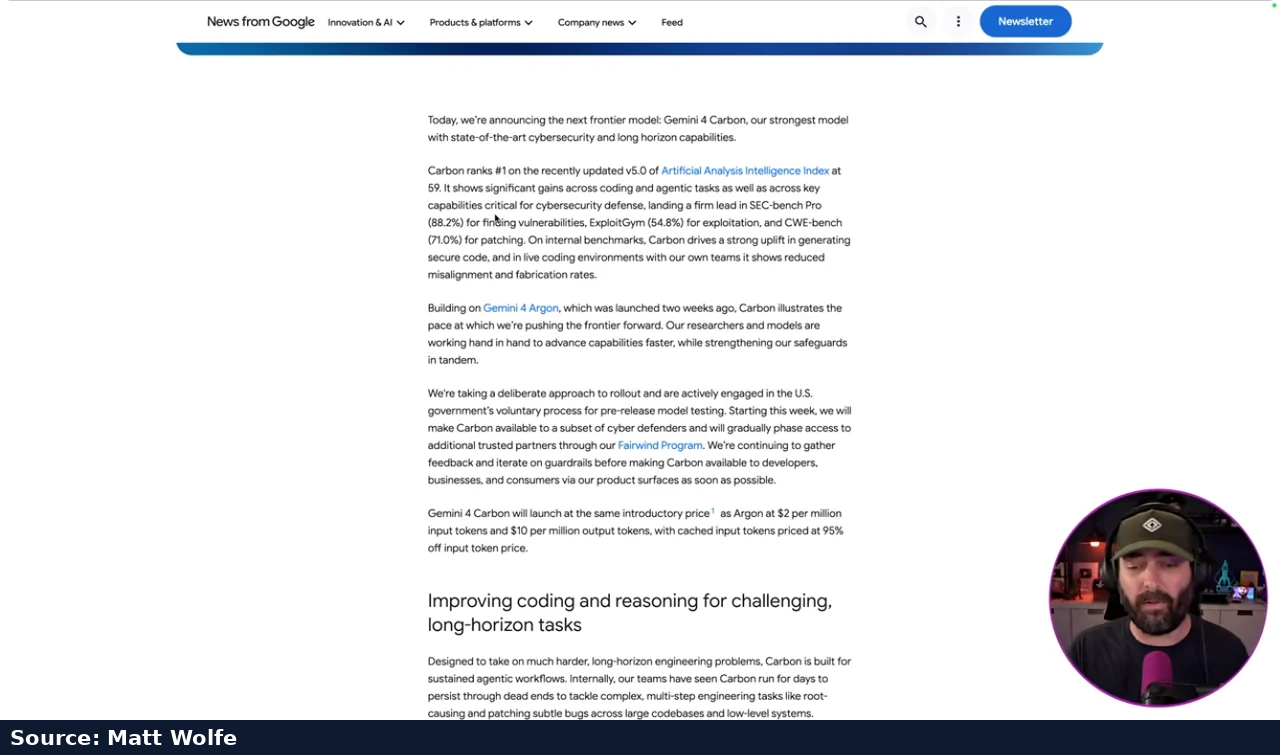
Matt Wolfe presents Gemini 4 Carbon as a step beyond Gemini 4 Argon, announced about two weeks earlier. He calls the rollout an announcement of a future announcement because he cannot yet run his own public tests.
Google’s 28 October announcement, checked on 1 November 2026, describes initial access for selected cyber defenders and trusted partners. Broader consumer and developer availability is planned. A reader should not assume that seeing a launch article means the model is already enabled in their account.

What the chart is measuring
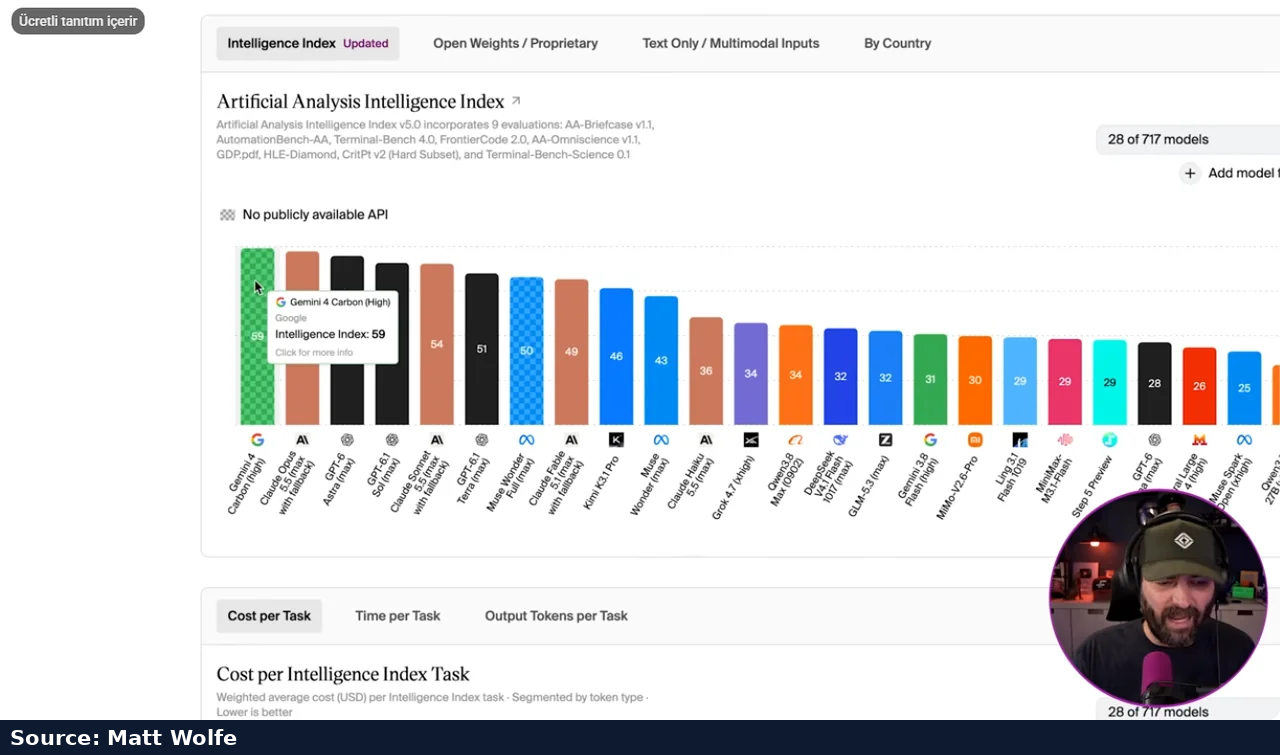
The video shows Carbon leading the Artificial Analysis intelligence chart, ahead of models including GPT-6 Astra and Claude Opus 5.5. Wolfe points out the patterned marking that indicates unavailable public API access in the displayed view.
Google reports a score of 59 on version 5.0 of that index. An index combines selected evaluations. Its result is a useful comparison under that evaluation’s conditions, not a promise that one model will win every request. The date and index version matter when comparing screenshots.
Why the benchmark table needs context
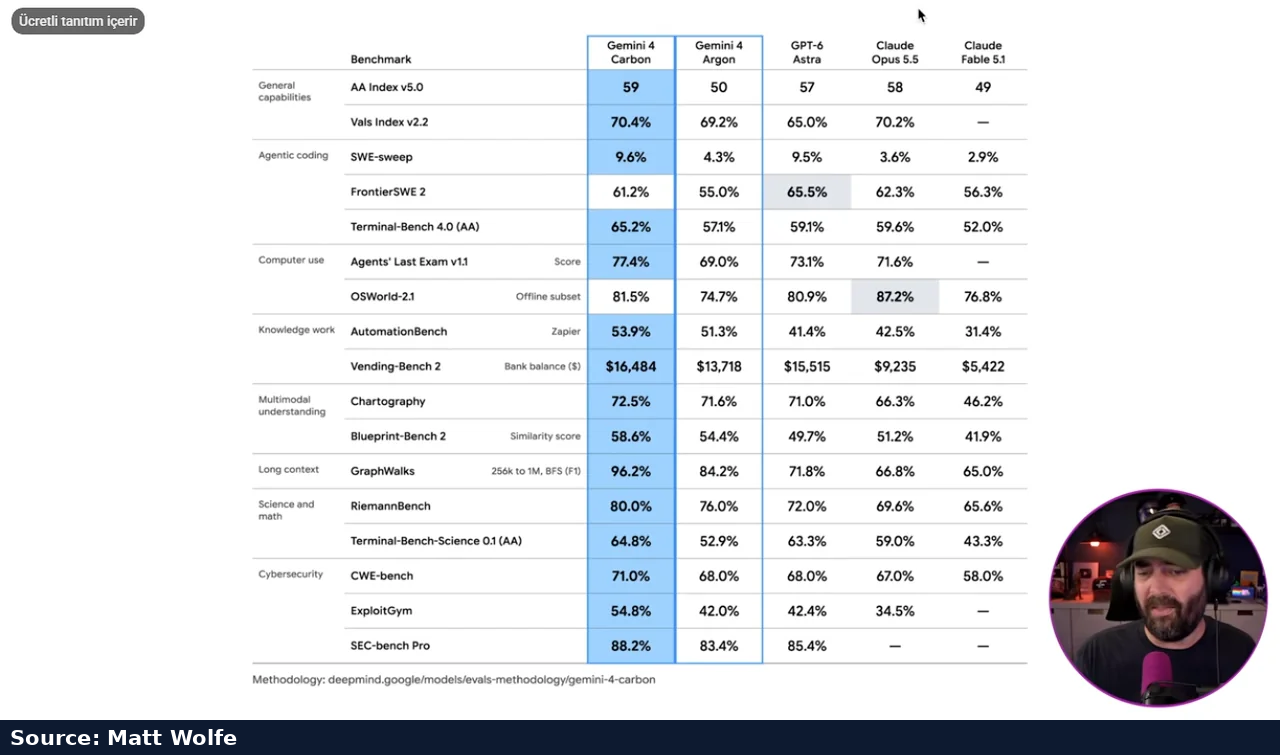
Wolfe points to the many blue cells in Google’s comparison table, where Carbon leads the models selected for those rows. The table includes Argon and other frontier systems. A benchmark is a structured test; each row measures a different capability.
The presenter has no hands-on Carbon experiment in this video. Unlike his Terra and Kimi SVG examples, this segment relies on announcement material and displayed evaluation results. Keep reported scores, vendor-selected comparisons and independently repeated tests clearly separated.
What to check before building around it
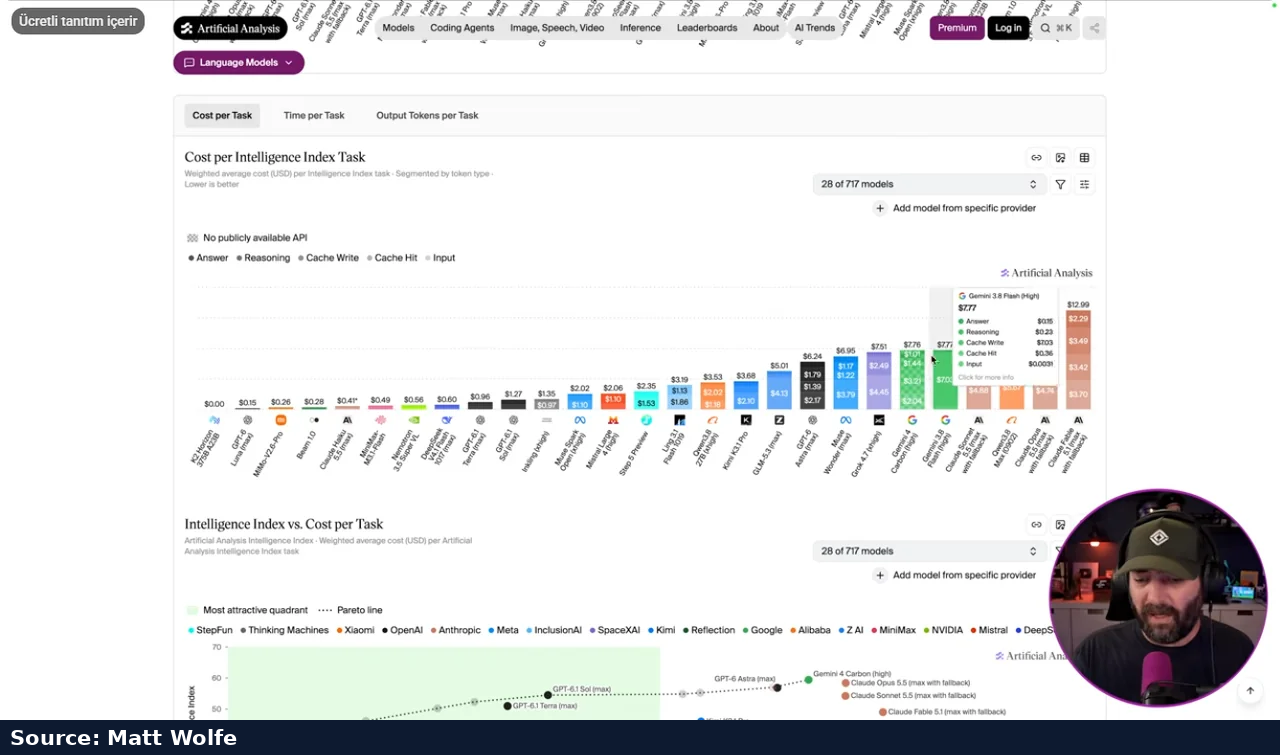
Wolfe describes Carbon as more expensive than most OpenAI models in the chart, but less expensive than many Anthropic models. This is a comparison in the displayed evaluation, not a complete price quotation or evidence of access.
Before planning an integration, confirm your actual account access, model identifier, region, limits and production terms. The video does not provide a complete setup procedure. Creating an implementation guide from its announcement segment would require additional documentation.
What this changes for model selection
Wolfe finds Carbon promising but cannot test it himself yet. Its early position makes it a model to watch, particularly for difficult coding and extended agent tasks, rather than a demonstrated replacement for an existing production workflow.
The practical next step is a representative evaluation once access is granted. Preserve the same inputs, tool permissions and success criteria as your current system. A public benchmark lead should trigger a careful comparison, not an automatic migration.

