

A world you can move through
Matt Wolfe tests early access to Google DeepMind’s Genie 4. A world model generates how a scene changes as a user moves or introduces events. This differs from simply watching a finished video: the user can steer the camera and request changes while the scene develops.
Google’s announcement confirms native audio and a research-preview rollout. Wolfe’s session is an early demonstration, not proof of broad account access. He describes a waitlist and users being admitted gradually.
The rainy-city experiment
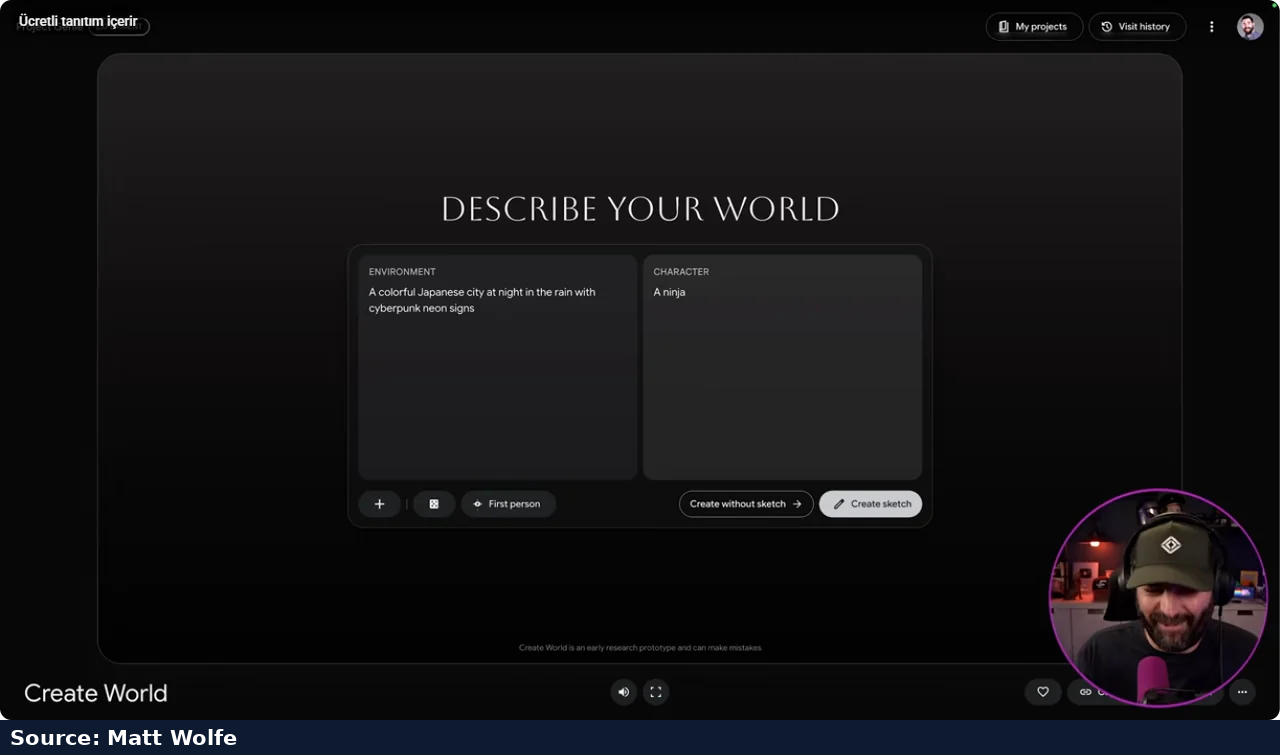
The interface separates environment and character. Wolfe enters a colorful Japanese city at night, rain and cyberpunk neon signs, then chooses a ninja. He notes a random-world option and a choice to start with or without a sketch.
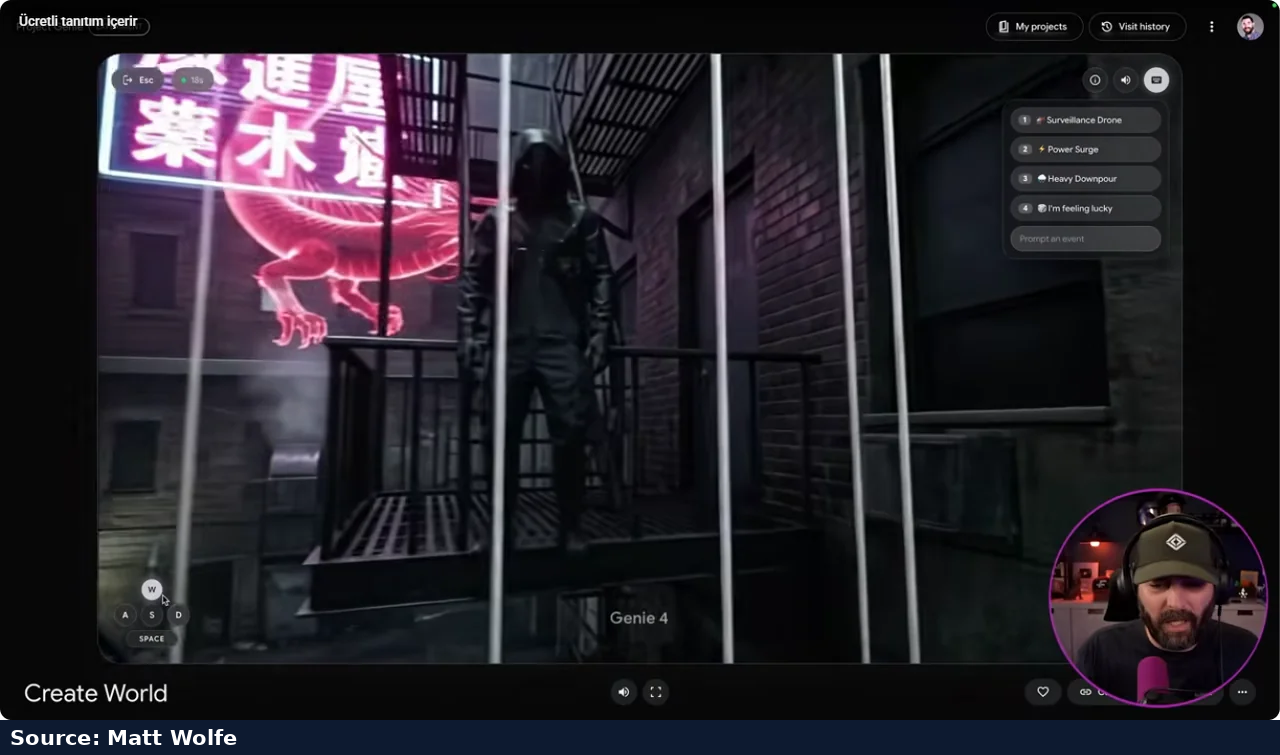
He navigates with keyboard controls and moves toward and away from the character. He selects a suggested police drone event, then types a request for Godzilla to stomp through the scene. In his demonstration the creature appears through a wall. Typing temporarily interferes with camera control, which he finds inconvenient.
An event request exposes a failure
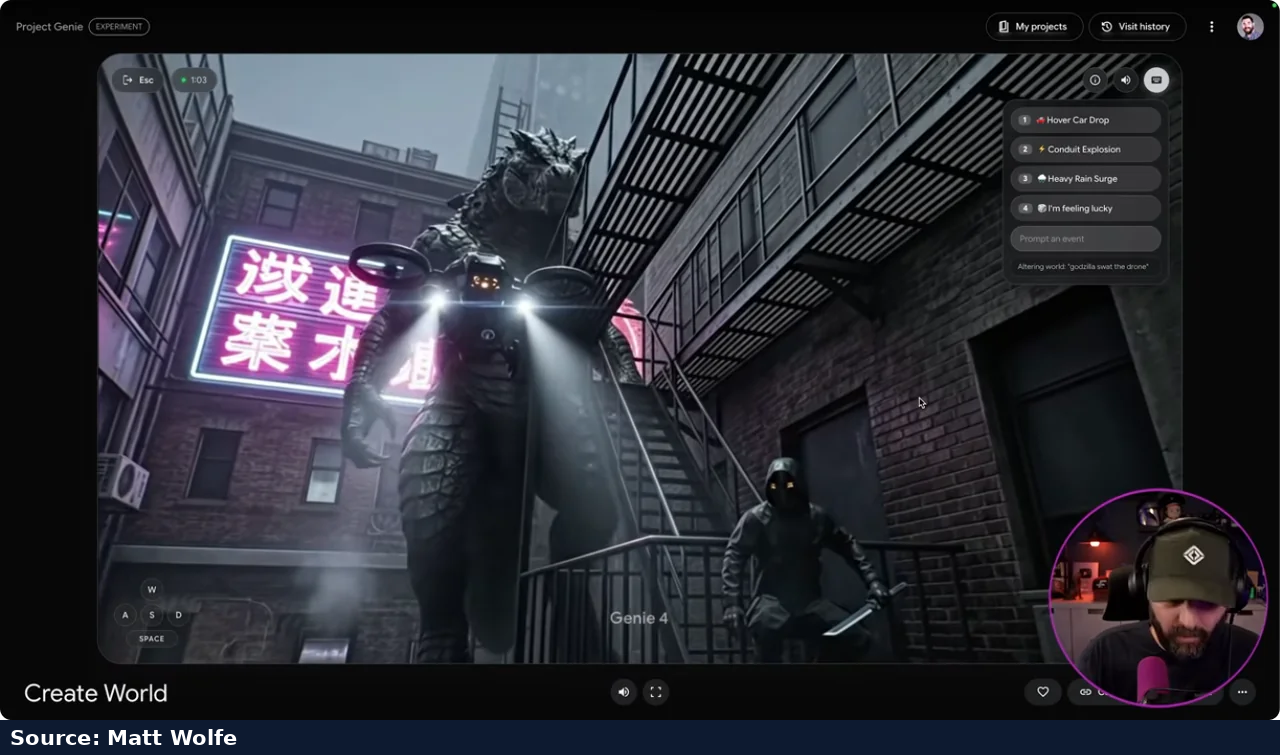
Wolfe next asks Godzilla to swat the drone. The action begins, but the session freezes and displays an error asking him to try again or send feedback. This is a visible limitation in the presenter’s run.
A scene can look convincing while still failing on a more demanding interaction. The demonstration therefore supports a narrower claim than a fully reliable simulation. It shows an impressive generated response and a breakdown in the same workflow.
The Candyland rotation test
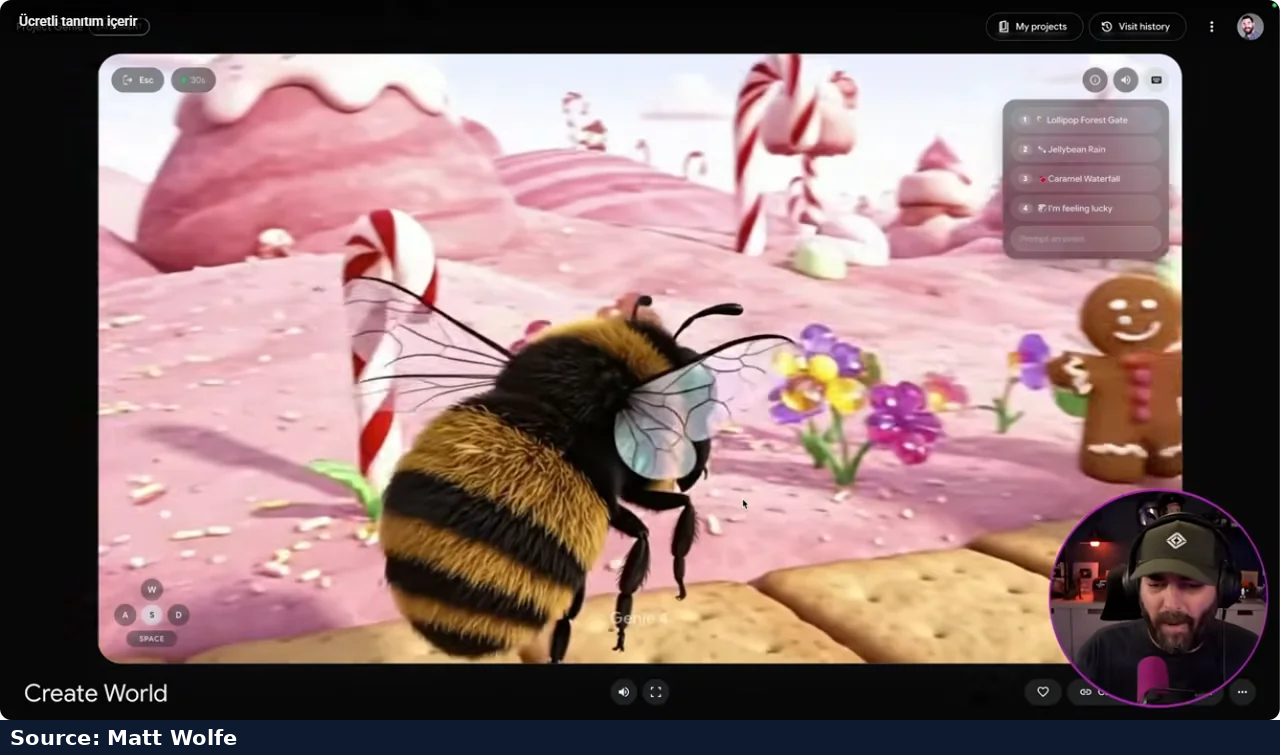
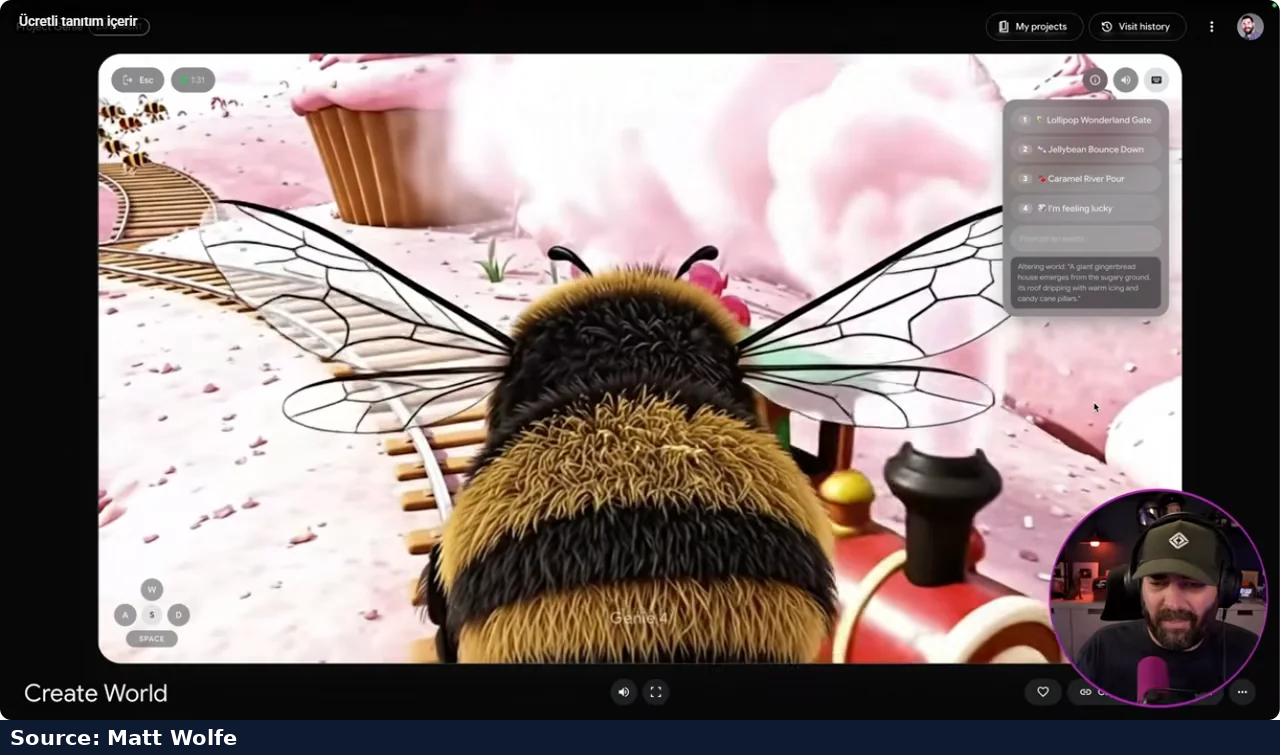
For the second experiment, Wolfe selects a first-person view, a cartoon Candyland environment and a bumblebee character. He turns the camera through a full circle to see whether landmarks stay in place.
Some features remain, while others change or appear at different distances; a cupcake appears and the cookie figures seem to shift. He then requests a lollipop signal switch. A signal appears, but he cannot clearly identify the lollipop. A passing train brings music and sound effects. These observations distinguish responding to a prompt from following every detail of it.
Two minutes and possible uses
The presenter’s interface has a timer of about two minutes, after which the session stops. This is the limit he encounters, not a verified limit for every future Genie product. He also reports better realism in some scenes than others.
Wolfe proposes film previsualization, quick game-concept exploration and possible simulated training environments. These are suggested uses; this video does not test a robotics training pipeline. He considers the demonstrated output more suitable for planning than finished footage. His imagined future of longer, coherent worlds and voice-controlled events is a prediction, not an available feature promised here.