

Science & Research

Google SLEEP: research into retaining knowledge in AI models

Google Research describes SLEEP, a method intended to help models learn new information while retaining earlier knowledge.

Source: AI SearchNovember 1, 20265 sections
18
On this page
  1. What is SLEEP?
  2. Why explore a new approach?
  3. What happens in the sleep phase?
  4. What do the results show?
  5. When can it be used?
  6. Source
Learn. Keep.

What is SLEEP?

SLEEP is a Google Research framework for continual learning in large language models. It aims to reduce the loss of previous capabilities as new knowledge is acquired.
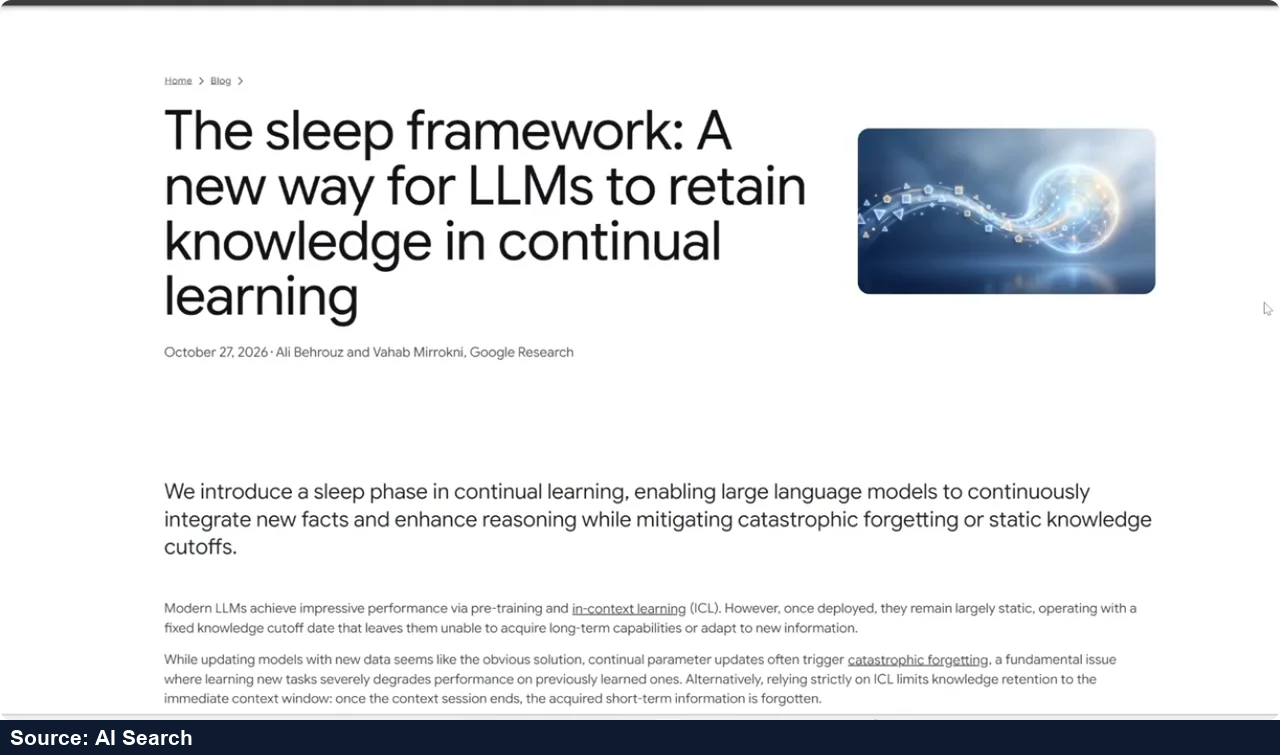
Google Research SLEEP page
Google Research SLEEP page — AI Search

Why explore a new approach?

Updating a model with new data can degrade previously learned skills. Relying only on the conversation context also limits retention to the available context window.
Illustration of a neural network
Illustration of a neural network — AI Search

What happens in the sleep phase?

The framework combines active interaction with a knowledge-consolidation phase. Sleep and dreaming are metaphors for technical processes; they do not imply human sleep or consciousness.
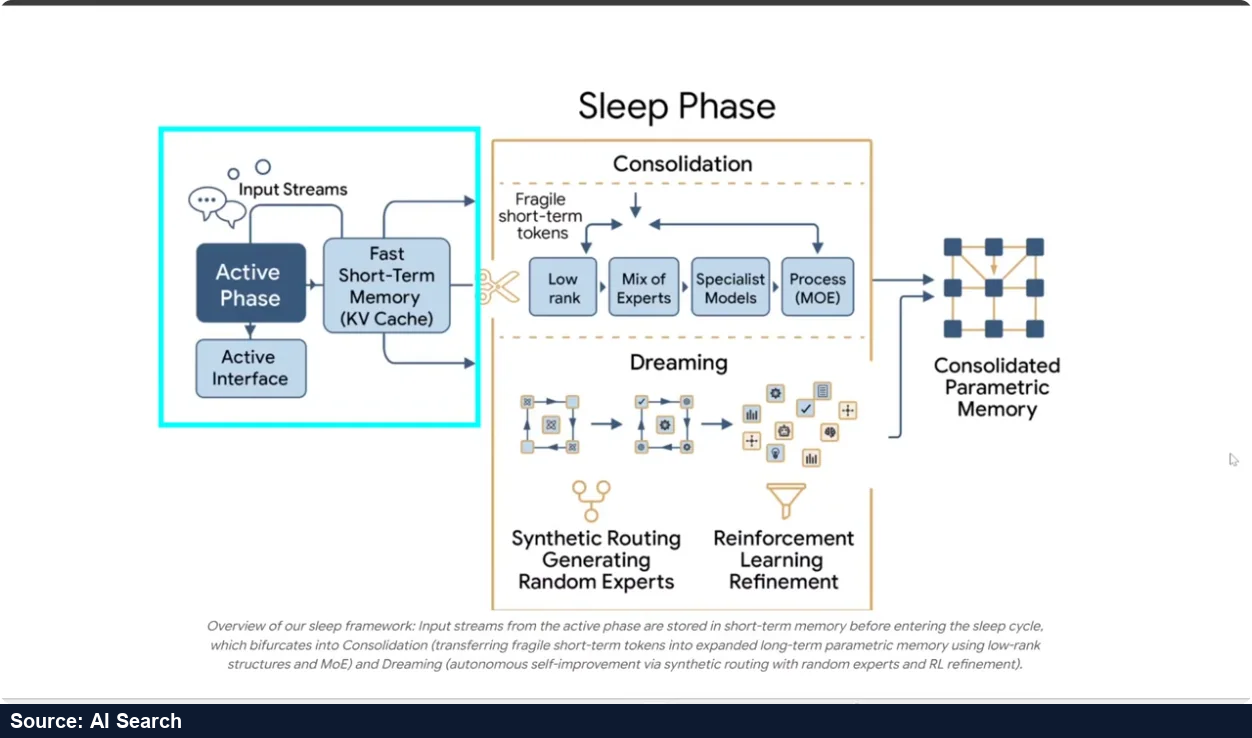
Diagram of active and consolidation phases
Diagram of active and consolidation phases — AI Search

What do the results show?

Google reports comparative results on continual-learning and long-context evaluations. The charts apply to specific datasets and experimental conditions; they do not guarantee the same performance in every model.
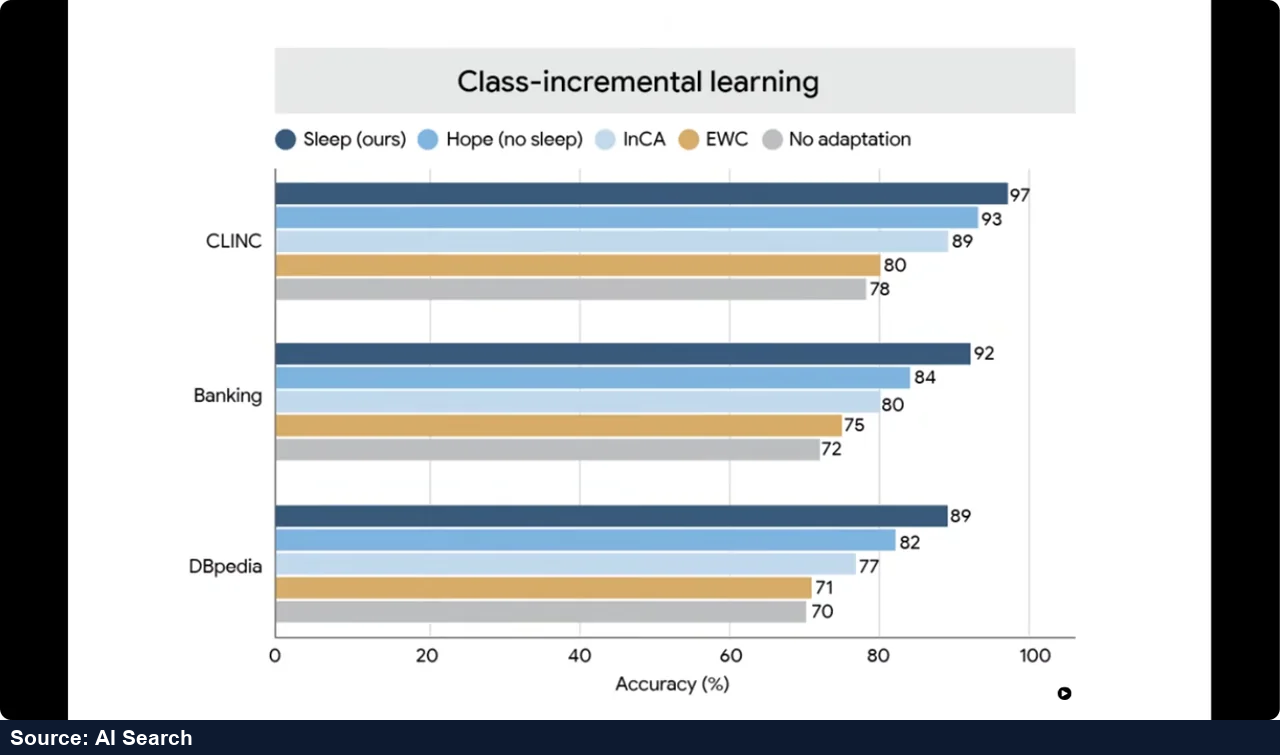
Chart comparing continual-learning results
Chart comparing continual-learning results — AI Search

When can it be used?

This is a research approach, not evidence that every chatbot now has permanent memory or a ten-million-token real-world conversation capacity. Deployment and practical performance require separate evaluation.
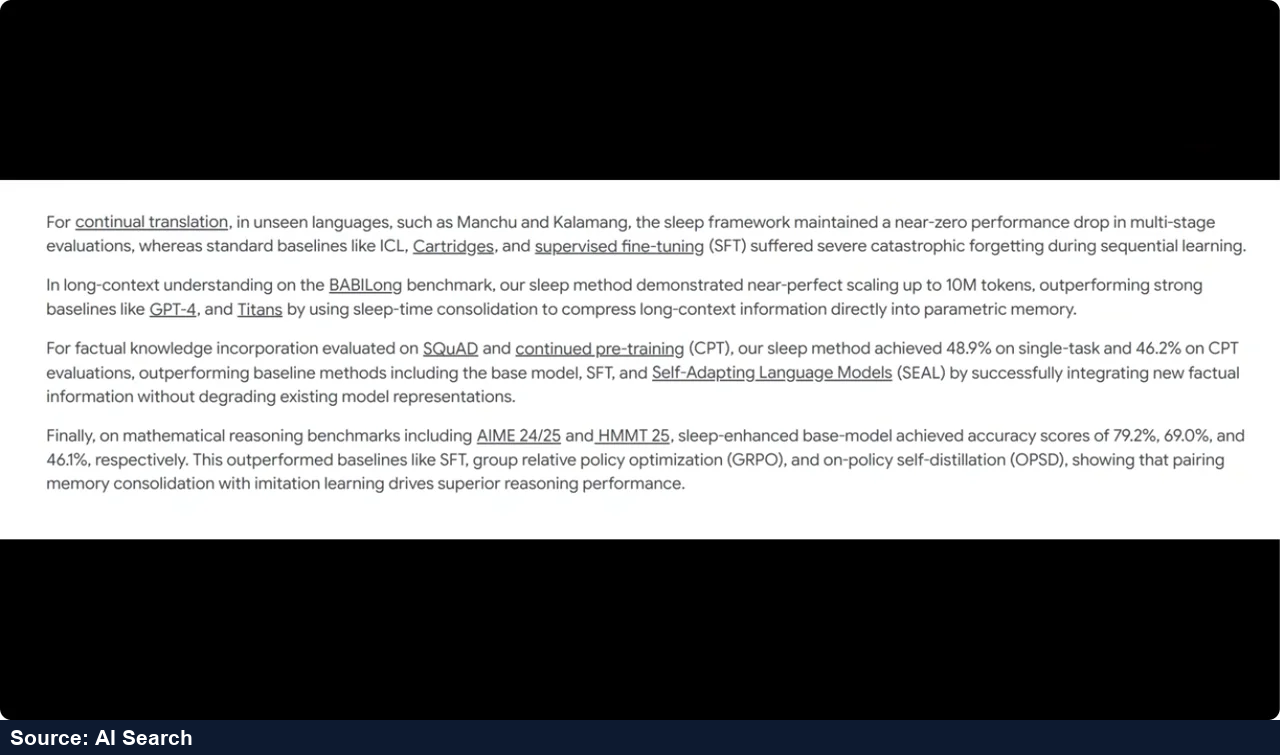
Summary of the research evaluations
Summary of the research evaluations — AI Search

Official Google Research article

The source behind this story

Source:AI Search ↗Official source · Opens in a new tab

This editorial story is based on the source’s explanations. The creator’s experience and claims are distinct from independently verified findings. Video and source images belong to their respective creators.

Your favourites

This list stays in this browser on your device. No account is needed, and other visitors cannot see it.

Use a story’s bookmark button to add your first favourite.